The landscape of technology is in a constant state of flux, with manufacturers and developers regularly introducing novel devices, software, and services. This continuous stream of innovation aims to enhance user experience, boost productivity, and introduce entirely new functionalities. Staying abreast of these advancements is crucial for consumers and businesses alike, as emerging technologies often reshape how we interact with the digital world. From sophisticated personal electronics to groundbreaking enterprise solutions, the United States remains a significant hub for these developments, with many leading companies launching their latest offerings within the domestic market. This overview delves into some of the notable recent and anticipated tech releases relevant to the US consumer and professional space, highlighting their potential impact and key features.
Advancements in Personal Computing Devices
The personal computer market continues to evolve, with manufacturers pushing the boundaries of performance, portability, and user interaction. Recent unveilings have focused on more powerful processors, improved battery life, and more immersive display technologies. For instance, several companies have introduced new lines of ultra-thin laptops that do not compromise on processing power, often utilizing the latest generation of Intel or AMD chipsets. These devices are designed for professionals and students who require robust performance on the go.
Furthermore, the integration of artificial intelligence (AI) into computing hardware is becoming more pronounced. Dedicated AI accelerators, often referred to as NPUs (Neural Processing Units), are being incorporated into CPUs and GPUs, enabling faster and more efficient processing of AI-driven tasks such as image recognition, natural language processing, and predictive analytics directly on the device. This shift promises to enhance the responsiveness of AI features in operating systems and applications, leading to more intelligent and personalized user experiences.
The realm of desktop computing has also seen significant updates, particularly in the high-performance segment. New graphics cards are offering unprecedented capabilities for gamers, content creators, and scientific researchers, with advancements in ray tracing and AI upscaling technologies. Simultaneously, the demand for more sustainable computing solutions is influencing product design, with manufacturers exploring the use of recycled materials and designing for greater energy efficiency and repairability. This holistic approach to personal computing aims to meet the diverse needs of a broad user base while addressing environmental concerns.
The Next Wave of Smart Mobile Devices
Smartphones and tablets continue to be at the forefront of consumer technology, with manufacturers consistently refining their flagship models and introducing innovative form factors. The United States market has been a key battleground for these advancements, witnessing the rollout of devices with enhanced camera systems, faster charging capabilities, and more sophisticated display technologies. Foldable phones, once a niche product, are becoming increasingly mainstream, with improved durability and more refined user interfaces.
Connectivity is another major area of focus. The widespread adoption of 5G technology is enabling faster download and upload speeds, lower latency, and the potential for new mobile applications and services that were previously unfeasible. This enhanced connectivity is not only benefiting consumers but also driving innovation in areas like mobile gaming, augmented reality (AR), and real-time collaboration tools.
Beyond traditional smartphones, the wearable technology sector is experiencing a surge in innovation. Smartwatches are offering more advanced health monitoring features, including ECG capabilities, blood oxygen tracking, and sleep analysis, providing users with deeper insights into their well-being. Fitness trackers are becoming more sophisticated, with enhanced GPS accuracy and a wider array of sport-specific tracking modes. The integration of these devices into the broader smart home ecosystem is also a growing trend, allowing for seamless control of connected devices and personalized automation.
Emerging Trends in Home Entertainment and Smart Living
The home entertainment sector is undergoing a significant transformation, driven by advancements in display technology, immersive audio, and the increasing prevalence of streaming services. Ultra-high-definition (UHD) televisions, including 4K and 8K models, are becoming more accessible, offering stunning visual clarity and vibrant colors. The adoption of new HDR (High Dynamic Range) standards is further enhancing picture quality, providing a more realistic and engaging viewing experience.
Smart home technology continues to expand its reach, with a growing array of connected devices designed to enhance convenience, security, and energy efficiency. Smart speakers and displays are acting as central hubs for controlling lights, thermostats, security cameras, and entertainment systems through voice commands. The development of interoperability standards, such as Matter, is beginning to simplify the setup and use of diverse smart home devices, promising a more unified and user-friendly experience.
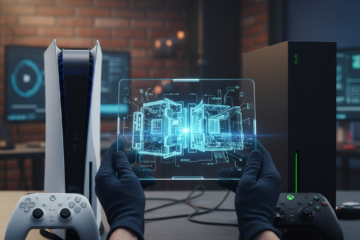
The gaming industry, a significant segment of home entertainment, is also experiencing rapid evolution. New game consoles offer enhanced graphical capabilities and faster loading times, supporting photorealistic visuals and complex game worlds. The rise of cloud gaming services is democratizing access to high-end gaming experiences, allowing users to play demanding titles on a wider range of devices without the need for expensive hardware. This trend is further blurring the lines between traditional gaming and broader digital entertainment consumption.
Innovations in Connectivity and Networking
The underlying infrastructure that powers our digital lives is also seeing continuous improvement. The rollout of next-generation Wi-Fi standards, such as Wi-Fi 6E, is providing faster speeds, lower latency, and improved performance in crowded wireless environments. This is particularly beneficial for homes and offices with a high density of connected devices, ensuring a more stable and responsive network experience.
The expansion of fiber optic internet services across the United States is also a critical development, offering significantly higher bandwidth and more reliable connections compared to traditional cable or DSL services. This increased capacity is essential for supporting the growing demand for high-definition video streaming, cloud computing, and emerging technologies that require substantial data transfer rates.
Beyond residential and office networks, advancements in cellular technology, particularly the ongoing deployment and optimization of 5G networks, are foundational to the future of mobile communication and the Internet of Things (IoT). These networks are enabling new applications in areas such as autonomous vehicles, remote surgery, and smart city infrastructure, promising a more connected and responsive future. The development of edge computing, which brings data processing closer to the source of data generation, further complements these connectivity advancements, enabling real-time decision-making and reducing reliance on centralized cloud infrastructure.
The Role of Software and AI in the Tech Ecosystem
While hardware often captures the spotlight, software development and artificial intelligence are the engines driving much of the technological progress. Operating system updates are increasingly focused on integrating AI-powered features, enhancing user privacy, and improving cross-device compatibility. New applications are constantly emerging across various platforms, from productivity suites that leverage machine learning to streamline workflows to entertainment apps that offer personalized content recommendations.
AI continues to be a transformative force across numerous industries. In the United States, companies are investing heavily in AI research and development, leading to breakthroughs in areas such as natural language processing, computer vision, and predictive modeling. These advancements are finding applications in everything from enhancing search engine capabilities and powering virtual assistants to driving autonomous systems and personalizing healthcare.
The cybersecurity landscape is also a critical area of software innovation. As technology becomes more pervasive, the need for robust security measures grows exponentially. Companies are developing more sophisticated threat detection systems, advanced encryption techniques, and AI-driven security solutions to protect user data and critical infrastructure from an ever-evolving array of cyber threats. The focus is increasingly on proactive defense mechanisms and resilient systems that can withstand and recover from attacks.
Future Outlook and Consumer Impact
The continuous stream of technological releases in the United States points towards a future where devices are more intelligent, connectivity is more seamless, and digital experiences are more immersive. Consumers can expect to see further integration of AI into everyday devices, leading to more personalized and automated interactions. The ongoing development of next-generation networking infrastructure will support a growing ecosystem of connected devices, from advanced wearables to sophisticated smart home systems.
The emphasis on sustainability is also likely to grow, with manufacturers increasingly incorporating eco-friendly materials and designing products for longevity and repairability. While the pace of innovation can be overwhelming, these advancements collectively aim to improve efficiency, enhance convenience, and unlock new possibilities across personal, professional, and entertainment domains. Staying informed about these developments is key to leveraging the latest technologies effectively and understanding their potential impact on our lives.
The relentless pace of technological advancement, particularly within the United States, signifies a future characterized by greater integration of intelligent systems into daily life. Innovations in AI, connectivity, and user interface design are poised to redefine convenience and efficiency, while also raising important considerations regarding data privacy and digital well-being. Navigating this evolving landscape requires informed awareness and thoughtful adoption of new tools and platforms.
Frequently Asked Questions
What are the most significant improvements in the latest smartphone releases in the US?
Recent smartphone releases in the US have focused on several key areas. Camera technology continues to be a major differentiator, with improved sensors, advanced image processing, and enhanced low-light performance. Display technology has also seen advancements, including higher refresh rates for smoother scrolling and more vibrant, energy-efficient OLED panels. Furthermore, the integration of more powerful processors, often with dedicated AI cores, is enabling faster performance and more sophisticated on-device processing for tasks like photography and augmented reality. Battery life remains a critical factor, with manufacturers optimizing hardware and software for longer usage times and introducing faster charging technologies.
How is AI being integrated into personal computers?
Artificial intelligence is increasingly being embedded directly into personal computing hardware and software. Many new laptops and desktops now feature CPUs and GPUs with dedicated Neural Processing Units (NPUs). These accelerators are designed to handle AI-specific tasks more efficiently, leading to faster and more responsive AI-powered features such as real-time translation, advanced image editing, intelligent noise cancellation during video calls, and personalized system optimizations. This on-device AI processing also enhances privacy by reducing the need to send sensitive data to the cloud for computation.
What is the benefit of Wi-Fi 6E for home users?
Wi-Fi 6E offers significant advantages for home users, primarily by introducing support for the 6 GHz radio band. This new band is less congested than the traditional 2.4 GHz and 5 GHz bands, leading to reduced interference and more stable connections. For users with multiple Wi-Fi devices, this translates to faster speeds, lower latency, and improved overall network performance, especially in densely populated areas or homes with many connected gadgets. Devices compatible with Wi-Fi 6E can leverage this cleaner spectrum for a superior wireless experience, particularly for bandwidth-intensive activities like streaming high-definition video or online gaming.
Are foldable phones becoming more practical for everyday use?
Foldable phones have made considerable strides in practicality. Early models often faced concerns regarding durability and the user experience of the folding mechanism. However, newer generations of foldable devices available in the US have addressed many of these issues. Manufacturers have improved hinge designs for greater longevity and introduced more robust display materials that are more resistant to scratches and creasing. Software optimization for foldable displays has also enhanced multitasking capabilities and app compatibility, making them more viable for everyday productivity and entertainment.
What role do new networking standards play in the smart home?
New networking standards are crucial for the expansion and seamless operation of smart homes. The continued rollout of 5G cellular technology, alongside advancements in Wi-Fi (like Wi-Fi 6E), provides the high bandwidth and low latency necessary for a multitude of connected devices to communicate effectively. Standards like Matter aim to simplify interoperability between devices from different manufacturers, reducing setup complexity and ensuring that smart lights, thermostats, security cameras, and other appliances can work together harmoniously. Reliable connectivity is the backbone of a functional and responsive smart home ecosystem.
The continuous introduction of new technologies in the US market presents exciting opportunities for enhanced digital experiences. As innovation progresses, users can anticipate more intelligent devices, faster and more reliable connectivity, and increasingly integrated digital ecosystems.
Conditions may vary; please check official rules.
Sources: Federal Communications Commission, National Institute of Standards and Technology
You will be redirected to the official site.

1 Comment
PS5 vs. Xbox Series X/S: A Deep Dive – Tech visocredit · setembro 22, 2026 at 8:01 pm
[…] Apps […]